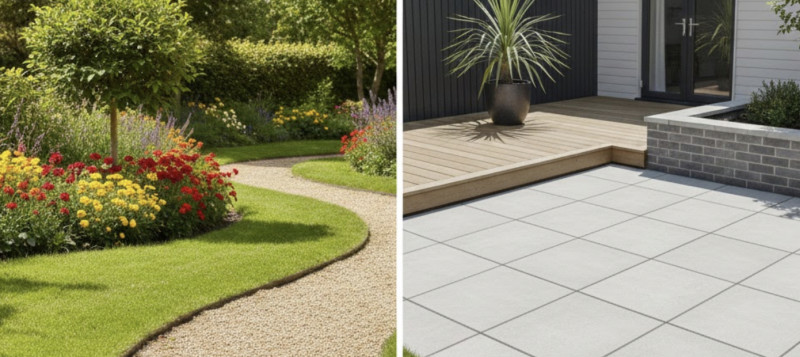
When planning a garden transformation, you need to understand soft landscaping and hard landscaping — they form the foundation of your project. Soft landscaping includes all living elements: plants, trees, shrubs, grass, and flowers that grow and change over time. Hard landscaping refers to the permanent or semi-permanent structures such as patios, decking, walls, fences, pathways, and water features that create your garden's framework.
Understanding these two categories helps you decide how to spend your budget and achieve the look you want. Most successful gardens use a good mix of both. The way you combine these elements determines whether your outdoor space feels welcoming, practical, and visually balanced.
Hard Landscaping Elements and Their Applications
Hard landscaping materials form the structural backbone of garden design. These permanent installations cost more upfront but typically last for many years with minimal maintenance. Common hard landscaping features include patios for entertaining, driveways for vehicle access, raised beds for gardening, pergolas for shade, and stone pathways.
The main advantage of hard landscaping is durability and low maintenance. Once installed, a quality patio or decking area needs only occasional cleaning rather than regular care. This appeals to busy homeowners who don't have time for constant upkeep. Hard landscaping also creates defined outdoor living spaces that can increase your property's usable square footage and boost its resale value.
Popular Hard Landscaping Materials
- Natural stone and porcelain paving for patios and pathways
- Composite or pressure-treated decking for elevated platforms
- Brick and block paving for decorative and functional surfaces
- Railway sleepers and timber edging for garden boundaries
- Concrete and asphalt for driveways and large-scale coverage
- Gravel and slate chippings for cost-effective ground cover
- Metal or wooden pergolas, arbours, and gazebos
- Retaining walls and terracing for sloped gardens
Soft Landscaping: Living Plants and Natural Elements
Soft landscaping brings colour, texture, and seasonal interest to your garden through carefully selected vegetation. Trees provide mature height and structure, while shrubs create mid-level screening and definition. Perennial and annual flowers add splashes of colour throughout the year, and lawn areas provide space and recreation surfaces. These living elements create a garden that changes with the seasons and matures over time.
The main benefit of soft landscaping is its versatility and visual appeal. A well-planned planting scheme transforms a basic space into one filled with fragrance, wildlife, and interest. Soft landscaping also offers environmental benefits: improved air quality, pollinator habitats, and reduced surface water runoff compared to extensive hard surfaces. However, maintaining healthy plants requires ongoing attention, seasonal pruning, watering during dry periods, and pest management throughout the year.
Types of Soft Landscaping Plants
- Deciduous and evergreen trees for structural height and year-round interest
- Ornamental shrubs selected for foliage colour and flowering periods
- Herbaceous perennials that return annually with minimal intervention
- Annual bedding plants offering intense colour during growing seasons
- Climbing plants and wall-trained specimens for vertical greening
- Specimen grasses providing movement and texture contrast
- Bulbs and tubers delivering concentrated seasonal colour displays
Cost Comparison: Hard and Soft Landscaping Investment
Hard landscaping typically costs more upfront but spreads costs across many years of minimal upkeep. A quality patio installation costs between £1,500 and £5,000 depending on size and materials, while professional decking ranges from £2,000 to £8,000 for medium gardens. These investments pay off through longevity, with many hard surfaces lasting 15-25 years or more.
Soft landscaping has a different cost profile. Initial planting costs are generally lower, with a comprehensive planting scheme costing £500 to £2,500 depending on plant quantity and variety. However, annual maintenance costs add up through professional pruning, seasonal bedding replacements, and ongoing care. Over a decade, soft landscaping can become costlier than expected if you employ professional gardeners regularly. For budget-conscious households, a mixed approach lets you prioritise hard landscaping for immediate impact while developing soft landscaping gradually.
Maintenance Requirements and Long-Term Care
Maintenance demands differ starkly between these approaches. Hard landscaping needs occasional pressure washing, weed control in crevices, and occasional repairs or replacement of damaged sections. Most homeowners can handle basic maintenance themselves, requiring perhaps four to six hours annually. If you hire professionals, expect annual costs between £300 and £800 for regular patio or decking care.
Soft landscaping maintenance demands far greater attention throughout the year. Spring requires planting and pruning; summer involves regular watering, deadheading, and pest monitoring; autumn means leaf collection and cutting back; winter needs protective measures and planning ahead. A typical garden bed requires 1-2 hours of maintenance per month during growing season, escalating during peak periods. Professional gardening services cost £25-£50 hourly, making regular care expensive for larger gardens.
Design and Aesthetic Considerations
Creating visual harmony requires balancing hard and soft elements thoughtfully. Hard landscaping provides structure, definition, and permanence that anchors the garden design. A well-placed patio becomes the focal point for entertaining, while decking creates a transition between house and garden. Pathways guide movement through the space, and walls provide both privacy and backdrop for planting schemes. These elements establish the garden's bones upon which softer elements are layered.
Soft landscaping infuses personality and dynamism into these structured spaces. A carefully planned perennial border against a hard-landscaped wall creates depth and interest; climbers ascending a timber pergola soften its architectural lines; specimen trees frame views and provide seasonal focal points. The most successful gardens employ balanced hard and soft landscaping proportions, typically allocating 40-60% to hard surfaces and 40-60% to planted areas, depending on your lifestyle and maintenance capacity. Contemporary minimalist designs often favour more hard landscaping, while cottage-style gardens emphasise soft elements.
Environmental Impact and Sustainability
Environmental considerations increasingly influence landscaping decisions. Extensive hard surfaces contribute to urban heat island effects, prevent water infiltration, and reduce wildlife habitat. Conversely, soft landscaping supports biodiversity, absorbs rainfall, improves soil health, and reduces your garden's carbon footprint. Native plant selection amplifies these benefits, attracting local pollinators and requiring less maintenance intervention.
A sustainable approach integrates permeable hard landscaping materials alongside diverse planting schemes. Permeable paving allows water drainage to soil beneath, reducing flooding risk and alleviating pressure on drainage infrastructure. Rain gardens planted with water-tolerant species manage runoff naturally. Eco-conscious landscaping combines durability with environmental responsibility, selecting recycled or locally-sourced materials and native plant varieties requiring minimal inputs once established. This balanced strategy delivers both aesthetic pleasure and ecological benefits without excessive maintenance demands.
Choosing Between Hard and Soft Landscaping for Your Garden
Your decision should reflect your lifestyle, maintenance capacity, budget, and aesthetic preferences. Choose hard landscaping if you want low-maintenance entertaining spaces, live a busy lifestyle, have a small garden requiring space efficiency, or prefer minimalist contemporary aesthetics. Hard landscaping suits sloped gardens where terracing prevents erosion and creates usable platforms.
Select soft landscaping if you enjoy gardening, value seasonal colour changes, want to support wildlife, prefer naturalistic aesthetics, or have larger garden spaces. This approach rewards patience as plantings mature and fill their allocated spaces over several growing seasons.
Most gardeners benefit from combining both approaches. Start by establishing hard landscaping foundations — patios, pathways, and structural elements — then develop soft landscaping gradually. This phased approach spreads costs, allows time for plants to mature, and gives you flexibility to adjust designs based on how your garden evolves.
Getting Expert Help for Your Project
Professional landscapers can assess your space, understand your preferences, and design schemes that integrate both approaches effectively. They access quality plant varieties, specialist materials, and have expertise in local growing conditions across the UK. Whether you need entirely new garden design or modifications to existing layouts, professional input ensures coherent, well-executed results.
When planning your landscaping project, gather quotes from multiple providers to compare costs, timelines, and design philosophies. Most reputable landscapers offer initial consultations to discuss your vision and provide transparent pricing. Compare quotes from 3-5 local landscapers, reviewing their portfolios and customer references before committing.
Frequently Asked Questions
Ready to Transform Your Garden?
Get free quotes from local landscapers on QuoteBank — compare prices, portfolios, and customer reviews in minutes.
Get Free Quotes Now
Trending articles
-
 Soft vs Hard Landscaping in the UK: A ...
Apr 2026
Soft vs Hard Landscaping in the UK: A ...
Apr 2026
-
 Garden Design Ideas for UK Gardens ...
Mar 2026
Garden Design Ideas for UK Gardens ...
Mar 2026
-
 Patio Installation in the UK: ...
Mar 2026
Patio Installation in the UK: ...
Mar 2026
-
 Garden Landscaping Costs in the UK: A ...
Mar 2026
Garden Landscaping Costs in the UK: A ...
Mar 2026
-
 Why Landscapers and Gardeners Should ...
Mar 2026
Why Landscapers and Gardeners Should ...
Mar 2026
-
 Why Google Reviews Can Make or Break ...
Mar 2026
Why Google Reviews Can Make or Break ...
Mar 2026